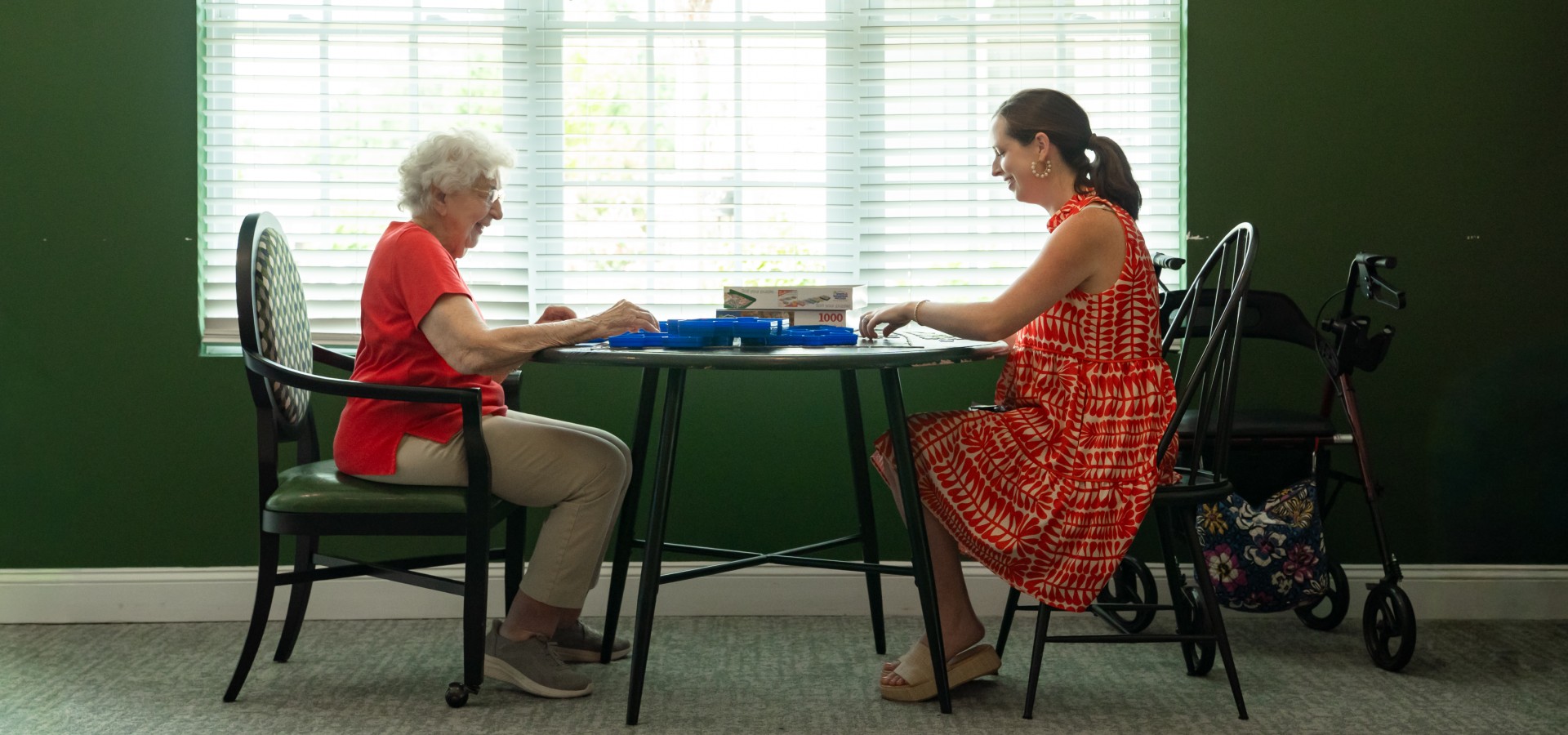
Discover How Our Arts Program Helps Seniors In Georgia With Alzheimer’s and Dementia.
The Arts Program at Manor Lake is a cornerstone of our memory care approach, designed to help seniors with Alzheimer’s and other forms of memory loss reconnect with themselves and others. Through music, painting, storytelling, and other art activities for elderly patients with dementia, this unique program encourages emotional expression, cognitive stimulation, and joyful interaction, all within a supportive and compassionate environment.

Why Does Creative Arts Matter in Memory Care?
Dementia isn’t one thing—it’s actually a family of related conditions that create a range of symptoms and signs. Depending on the exact diagnosis and the person affected, there can be more or less pronounced symptoms. But some consistently found symptoms of dementia include memory loss, communication challenges, depression, and anxiety.
Even in their mildest form, though, these symptoms can dramatically alter a person’s life and personality. Daily routines and simple tasks like ordering at a restaurant can become anxiety-inducing episodes and a source of agitation. But art therapy for dementia patients provides a respite from these experiences. Through painting, listening to music, singing, and storytelling, residents get back in touch with who they are while expressing it for the world to see.
As if the immediate mood-boosting benefits weren’t enough, art activities for the elderly with dementia have more pronounced impacts for residents. Multiple studies have shown that art therapy for elderly dementia patients can reduce behavioral and psychological symptoms of dementia, like depression, apathy, and a lack of motivation. Other studies have even shown improvements in reminiscence, or the ability to recall past events.
Music Therapy and Engagement for Seniors.
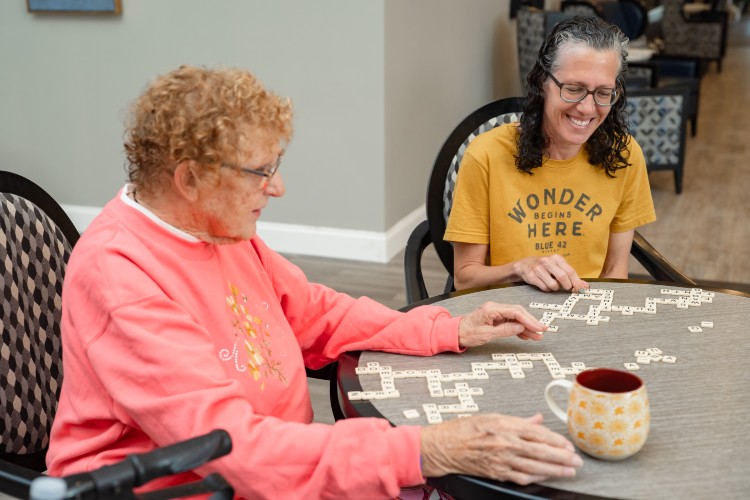
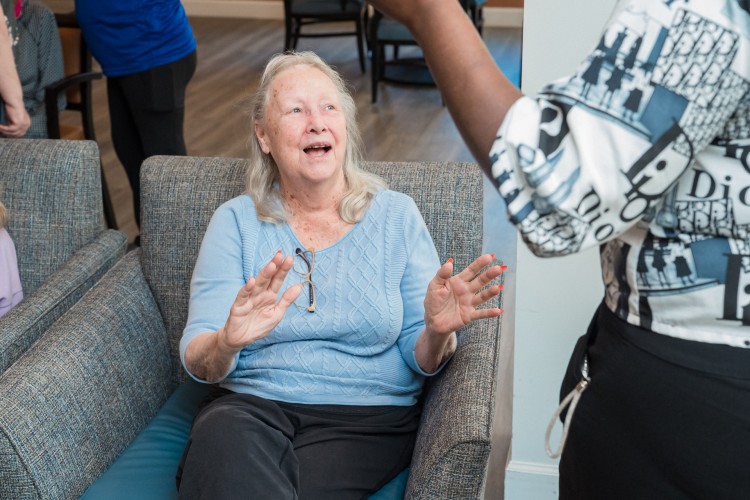
Music therapy for seniors with dementia is a core component of our Arts Program because it benefits patients in multiple ways and can be practiced daily. Music can be listened to, attentively appreciated, played, and composed, meaning there are various ways our residents can incorporate music therapy into their daily lives. Our residents can get in touch with their youth or recent past through personalized playlists, make meaningful friendships through group music activities, or sing their way to a better day.

Personalized Music Experiences
An effective intervention for dementia patients is personalized playlists. Our staff creates customized playlists for our residents to allow them to enjoy all the music they listened to throughout their lives. Creating personal playlists is art therapy for elderly patients that doesn’t feel like art therapy. But while it may feel like nothing more than listening to a lifetime of musical tastes, these playlists help residents unlock memories and reconnect with a sense of self.

Group Music Activities
Personalized playlists are a great way to capture some of the benefits of music therapy for seniors with dementia, but it’s not the only way. Our group activities, like hand drums, bells, and singing, allow residents to double up on the benefits of music therapy. Not only do these activities develop memory skills and lift spirits, but they also provide a key form of socialization for residents.

Benefits of Music for Dementia Patients
Our Harmony Program promotes wellness, manages stress, alleviates pain, enhances memory, and provides unique opportunities for communication and interaction. Songs, both their melodies and their lyrics, can trigger a person’s memories and even their abilities. For example, a dementia patient who listened to a particular song while doing a task can remember how to do the task while the song plays.
Creative Art Activities for Seniors with Dementia.
Dementia’s most noticeable symptom is memory loss, but it’s far from the only one. Dementia can diminish communication capabilities and become a source of frustration. That greatly impacts how a person is able to express their basic needs, let alone their creativity. We understand this challenge, which is why we offer creative art activities daily.
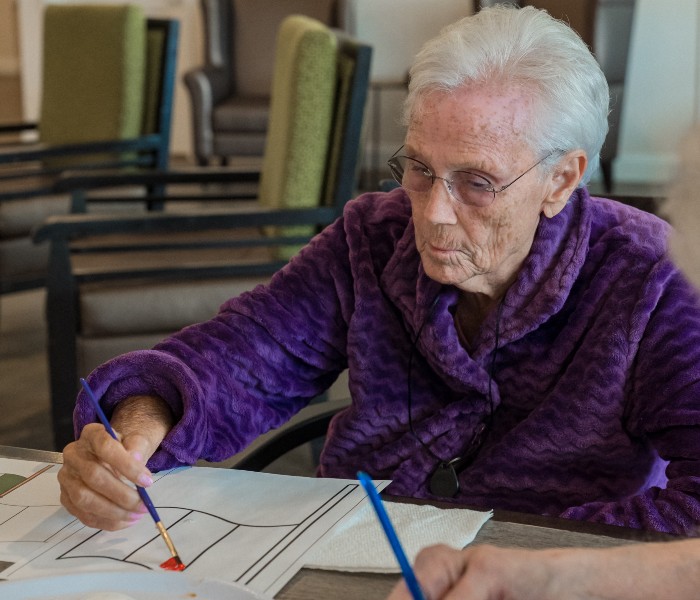
Now, when people hear that we offer art therapy for elderly residents with dementia, they immediately picture our painting activities—for good reason! This program puts a paintbrush in the hands of residents with Alzheimer’s or other memory impairment and lets their creativity run wild. The results are amazing. Residents who have struggled with even the most modest tasks of everyday living have astounded all of us with their creative spirits and wonderful creations.
Through the creativity that is unlocked and presented through colors and patterns, the residents are speaking to us with incredible beauty and grace – proving that a picture is indeed worth a thousand words. Residents can express themselves, their memories, or their unique needs through shapes, colors, and forms whenever words may fail them. The program meets both basic needs and the very human need for creative expression.
Benefits of The Arts Program for Seniors.
We love seeing the wonderful art and music our residents create because it’s truly beautiful, and we know it’s helping to improve their overall quality of life. Art therapy for elderly residents with dementia is an increasingly reliable non-pharmacological intervention that comes without harmful or dangerous side-effects. The benefits transcend one category—our residents experience benefits across various aspects of their lives.
Emotional Wellbeing
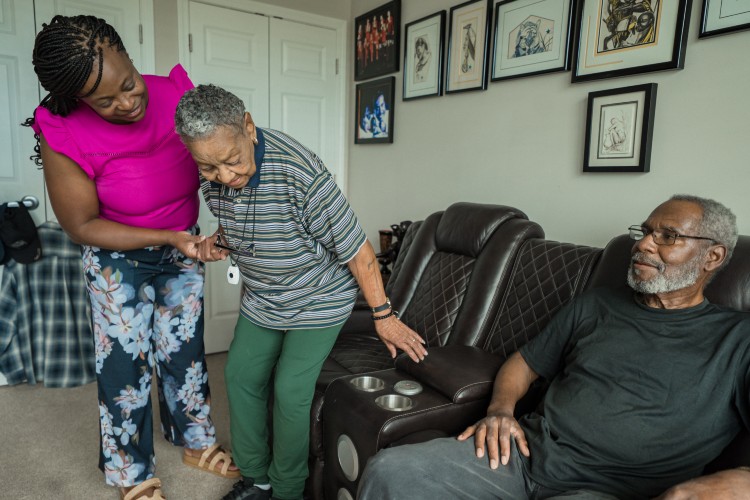
Numerous studies have shown that art therapy improves emotional well-being in residents with dementia. It isn’t that much of a surprise when you consider how much fun it is to play music and paint with friends! But on a deeper level, these art activities for elderly dementia patients enable self-expression in a way our minds and hearts need.
Cognitive Stimulation
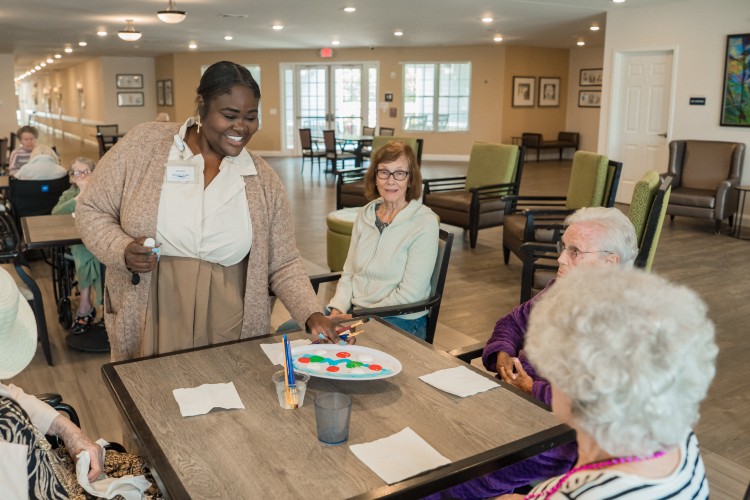
Art therapy for elderly residents with dementia can be a bit like a puzzle. Residents have to select the right tools, develop a plan, memorize some important steps, and improvise. Practicing these skills consistently in the art therapy setting gives our residents the cognitive stimulation they need each day while giving them opportunities to improve.
Confidence and Self-Expression
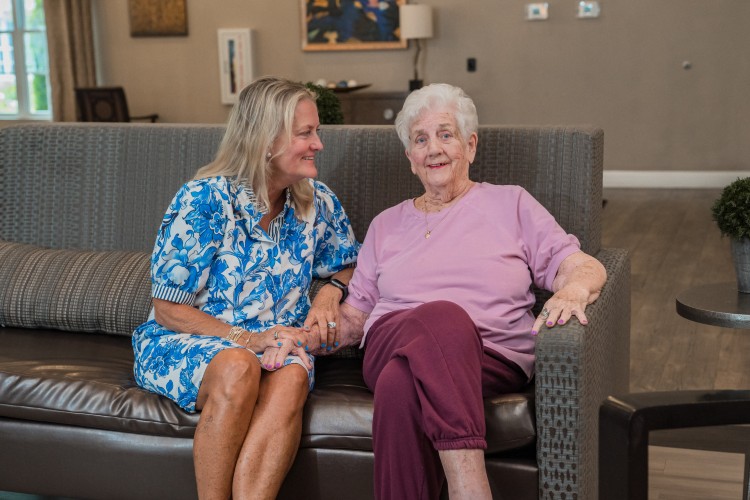
Art therapy has also demonstrated an ability to boost self-esteem and confidence in residents with dementia. Through participation in painting, singing, or storytelling, our residents remember they have unique skills and gifts worth sharing with others. At a time when residents can be struggling to cope with a diagnosis, our Arts Program steps in to remind them how special and valuable they are.


Art Therapy for Elderly Dementia Patients: Frequently Asked Questions
What is the Arts Program?
The Arts Program is a creative memory care initiative at Manor Lake that uses music, art, and storytelling to help seniors with dementia express themselves, build confidence, and connect with others in a supportive environment. For example, we offer music therapy for seniors with dementia that includes singing, dancing, and curated playlists.
How does art help seniors with dementia?
Engaging in creative activities like painting, listening to music, and telling stories can stimulate cognitive function, reduce anxiety, and spark meaningful memories. Art therapy for dementia patients is especially effective in improving the overall well-being of people with dementia and dementia-related diseases.
What types of activities are included?
Various art projects for elderly residents comprise our Arts Program, rather than just one medium. We provide painting activities to channel creativity, communication, and a joie de vivre that some feel is missing from their life. Music-related activities are another form of art therapy for elderly residents that help reconnect residents with past memories.
Can residents participate regardless of artistic ability?
Of course! There is no need to be a Monet-in-disguise to participate in the art projects for elderly residents we offer at Manor Lake. There’s no need to be an experienced painter or musician to enjoy the benefits of these art therapies because the process is the point, not the end result.
Is music therapy beneficial for Alzheimer’s patients?
It is. Studies have shown that playing musical instruments can not only help prevent Alzheimer’s, but it can also help build the skills and resources people need to forestall the disease’s progression. It can also help on a daily level by creating a more calming and relaxed atmosphere for residents.
Who leads the activities?
Our trained, experienced staff leads our art therapy for elderly residents program. However, because art activities lend themselves well to self-direction, we often find that the program gives our residents more control over their daily life and routine.
The Manor Lake Experience:
Told by Residents and Families.
The most meaningful insight comes from those who have experienced it firsthand. Hear Manor Lake residents and families share their stories, perspectives, and reasons for choosing the community they call home.
Living at Manor Lake: Their Journey,
Their Words.
Living at Manor Lake: Their Stories,
Their Words.
How is Manor Lake Different?
All Independent Living, Assisted Living, and Memory Care communities are licensed by the state to provide pre-defined services. So, what separates one community from another? You’ll discover our communities are ultimately defined by the people who care for your loved ones.
Scheduling a tour is the best way to see the difference for yourself.